PRESS RELEASE
NORMAN O'FLYNN: Enormous
Feb 26 – Mar 9, 2026
Opening reception: 26 February 2026 at 18:00
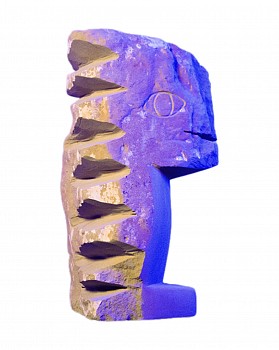
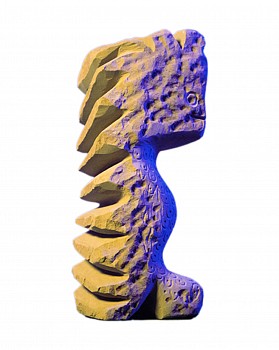
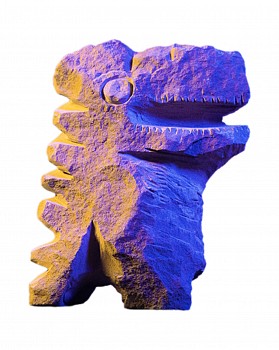
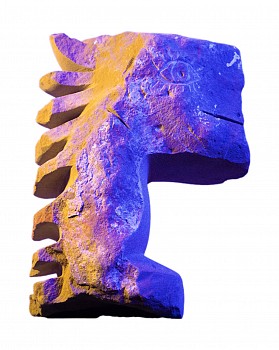
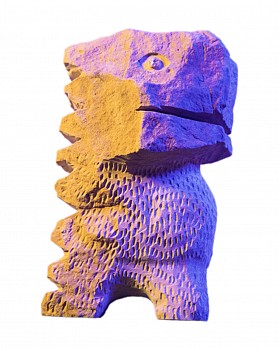
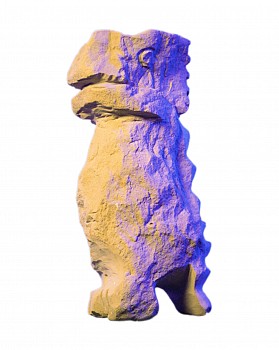
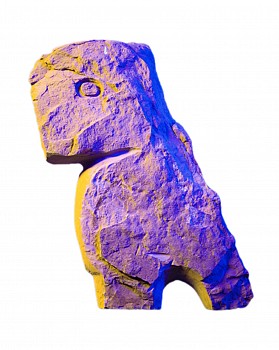
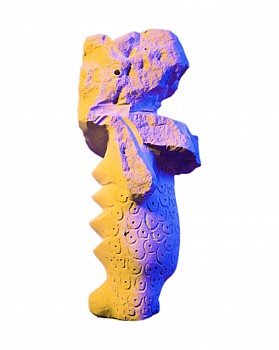
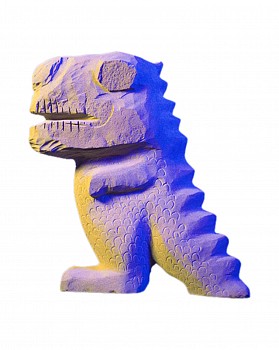
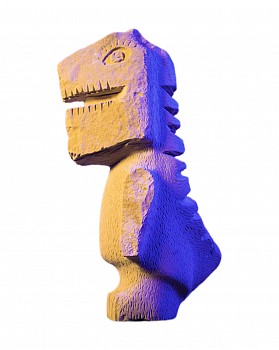
This exhibition presents a group of sandstone dinosaur sculptures installed across a floor of artificial grass, elevated on contemporary construction blocks and set against walls painted in a periwinkle blue. Together, these elements form a constructed landscape—part diorama, part speculative site—where multiple timelines coexist.
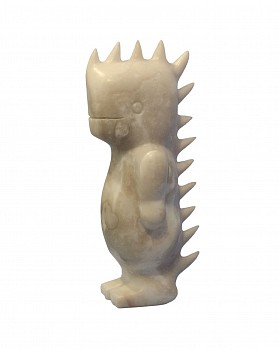
Carved from reclaimed sandstone originally used in domestic architecture, the dinosaurs carry the weight of permanence, shelter, and human settlement. Reworked into figures of extinction, they quietly undermine the promise of durability embedded in the material itself. Neither heroic nor threatening, the dinosaurs appear softened and restrained—figures that suggest failed dominance rather than triumph.
The use of standard concrete building blocks situates the sculptures firmly in the present. Functional, modular, and provisional, these supports deny the authority of the plinth and position the works as temporarily assembled rather than monumental. The dinosaurs are not memorials to the past, but presences held in suspension.
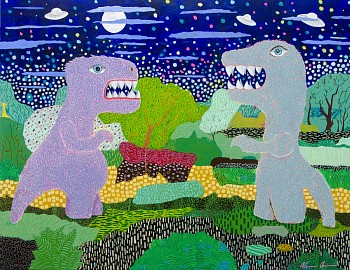
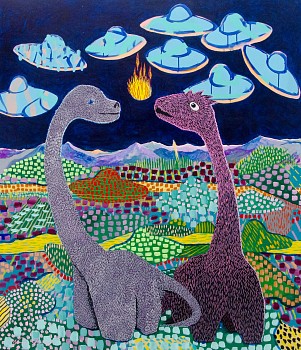
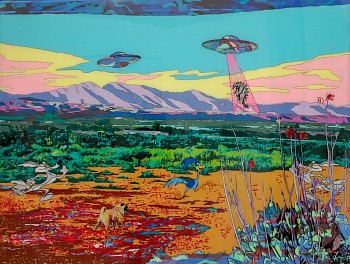
Hovering above the scene, simplified UFO forms appear against the painted walls. They offer no narrative resolution and no explanation. Like the dinosaurs, they exist in a space between fact, speculation, and cultural myth. Their presence introduces a further scale of time—cosmic, unknowable, and unresolved—expanding the landscape beyond human history and certainty.
The UFOs do not intervene; they observe. Their quiet hovering destabilises ideas of origin, extinction, and causality, echoing long-standing uncertainties surrounding both prehistoric life and the possibility of life beyond Earth. Together, dinosaurs and UFOs occupy a shared territory of unresolved belief—things we return to repeatedly, despite never fully understanding.
Rather than presenting answers, the exhibition stages uncertainty. It reflects a contemporary condition in which ecological collapse, extinction, and cosmic speculation are increasingly softened, aestheticised, and rendered approachable. The work does not dramatise catastrophe, but instead presents its aftermath: a calm, static environment where the past and future feel equally fragile.
In this landscape, permanence is provisional, observation comes too late, and what remains standing is neither warning nor solution—only presence.